NVIDIA's 550B Nemotron runs impossibly fast at 300 tok/s
Quick Scribbles
-
NVIDIA Nemotron — 550B model beats US competitors while running 300 tokens per second.
-
AWS MCP Security — Published OAuth implementation guide for securing enterprise AI agent deployments.
-
Feature Store Tutorial — Hands-on guide prevents training-serving skew with dual-store architecture and versioning.
-
Claude Code Worktrees — Git worktrees enable parallel agent sessions without file collision issues.
Good morning, AI Knowledge Worker. NVIDIA just released a 550B parameter model that outperforms every US open competitor. It serves 300 tokens per second on a single endpoint.
The chip maker is now competing in models, not just selling hardware. Can hardware expertise translate into inference efficiency advantages?
In this issue:
-
NVIDIA’s 550B Nemotron runs impossibly fast
-
AWS publishes OAuth security guide for MCP servers
-
Building feature stores that prevent training-serving skew
-
Scaling Claude Code with git worktrees for parallel sessions
NVIDIA’s 550B Nemotron Crushes Every US Open Model—While Running 3x Faster Than It Should
The Scoop: NVIDIA released a 550B open model that beats every US competitor. It runs impossibly fast at 300 tokens per second.
The Technical Details:
-
Active-sparse MoE architecture activates only 55B of 550B parameters per token for inference efficiency
-
Hybrid Mamba-2 state space model plus Transformer design enables linear context scaling
-
Scores 48 on Intelligence Index, outpacing Gemma 4 (39) and gpt-oss-120b (33)
-
Serves 300+ tokens/second on single endpoint versus 50-100 tok/s for Chinese models
-
1M token context window with 95% accuracy on Ruler benchmark at full length
-
Available under Apache 2.0 license via build.nvidia.com and OpenRouter June 4th
Why It Matters for You: This model runs 5x faster than competitors at 30% lower cost. Production agents making hundreds of LLM calls per task benefit from throughput economics. The 550B model feels like a 55B one in deployment footprint. NVIDIA now competes in models, not just sells the hardware to run them. The US open-weights gap to China narrowed from a chasm to six points.
The Bigger Picture: The chip vendor building the best-in-class open model signals a shift. When inference efficiency determines production viability, the hardware maker wins by design. This mirrors how Google leveraged TPU architecture advantages for Gemini deployment economics.
Securing Enterprise MCP Servers: AWS Shows How OAuth Code Flow Works with AgentCore Gateway
The Scoop: AWS published the first detailed guide for securing MCP servers in production. The implementation uses OAuth code flow with AgentCore Gateway.
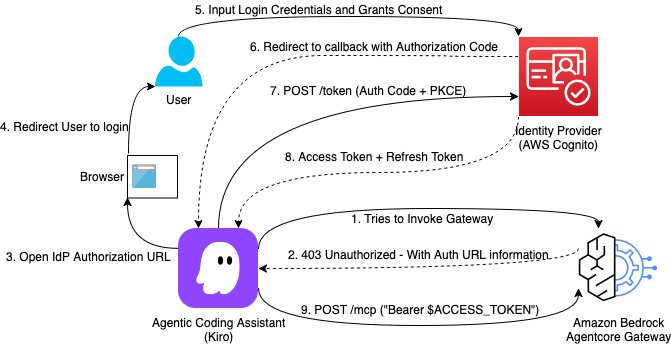
The Technical Details:
-
AgentCore Gateway acts as OAuth resource server validating JWT tokens before proxying requests.
-
Authorization code flow uses PKCE (Proof Key for Code Exchange) eliminating client secrets.
-
Gateway validates token signature, expiration, issuer, and custom claims like `cid` or `azp`.
-
Supports any OIDC-compliant IdP including Okta, Entra ID, and Cognito configurations.
-
Token validation occurs on every inbound request with automatic discovery via Protected Resource Metadata.
Why It Matters for You: This solves the enterprise authentication gap blocking production AI agent deployments. Organizations can now verify AI assistant requests come from authorized users only. Implementation requires minimal overhead: configure your IdP, set Gateway discovery URL, connect clients. Security teams gain full audit trails and identity-based access control for AI tools.
This enables safe exposure of internal systems to AI coding assistants. Companies can deploy Claude Code and similar tools without compromising security posture.
The Bigger Picture: Enterprise AI adoption is shifting from experimentation to production at scale. This authentication blueprint mirrors how enterprises secured API access a decade ago. Organizations that implement proper AI agent authentication now will lead in productivity gains.
Building a Production Feature Store: The MLOps Component That Actually Prevents Training-Serving Skew
The Scoop: A hands-on tutorial shows how to build a feature store that prevents training-serving skew. This silent bug makes your model learn from future data it can’t access during prediction.
The Technical Details:
-
Dual-store architecture: PostgreSQL stores full feature history with timestamps for training queries. Redis serves latest values with sub-10ms p99 latency for production.
-
Point-in-time joins: SQL LATERAL joins ensure training features match exactly what’s available at prediction time. The `computed_at <= e.timestamp` clause prevents future data leakage in training sets.
-
Automatic versioning: SHA-256 hashing of feature transform functions creates new versions on code changes. No manual version bumps required, eliminating “forgot to update version” bugs.
-
Built-in drift detection: Evidently AI compares every ingestion run against reference distributions automatically. Returns structured drift reports without writing custom evaluation code.
-
FastAPI serving layer: Async endpoints with Prometheus metrics for latency and throughput monitoring. Python SDK supports both sync and async clients for different use cases.
Why It Matters for You: Training-serving skew is the cholesterol of ML systems. Your model trains on lab results recorded after the diagnosis timestamp. Offline metrics look great but production predictions degrade silently over months.
This infrastructure prevents that degradation before it reaches production. Companies like Uber, Airbnb, and LinkedIn built internal feature stores for this exact reason.
The tutorial includes working code for temporal joins and feature versioning. Implementation complexity is moderate: one Docker command spins up the entire system with PostgreSQL, Redis, and a Streamlit UI.
The Bigger Picture: Most ML portfolios show model training but skip the infrastructure that prevents production failures. Feature stores are interview questions at every serious ML company. This is the MLOps component that separates demo projects from production systems.
Scaling Claude Code with Git Worktrees: Running Parallel Agent Sessions Without File Collisions
The Scoop: Git worktrees let you run multiple Claude Code sessions simultaneously. Each session gets isolated file access without collisions.
The Technical Details:
-
Worktrees create separate working directories that share one `.git` repository. Each session edits different files on disk.
-
Launch with `claude —worktree feature-name` to create isolated branches. Sessions operate in `.claude/worktrees/` subdirectories by default.
-
Agent teams coordinate across worktrees using shared task lists and direct messaging. Teams debate competing hypotheses instead of sequential exploration.
-
Copy secrets with `.worktreeinclude` files using gitignore syntax. Untracked files like `.env` transfer automatically to each worktree.
-
Each teammate runs full Claude context windows independently. Split panes or in-process modes monitor progress across parallel sessions.
Why It Matters for You: Single Claude sessions hit context window limits fast. Parallel sessions multiply throughput without corruption.
Worktrees prevent the silent data loss that kills parallel development. Two agents editing the same file overwrite each other without warnings.
Agent teams cost tokens but deliver better debugging outcomes. Five teammates testing competing hypotheses surface root causes single agents miss.
The `/batch` command uses this architecture for repo-wide refactors. Twenty parallel agents generate twenty clean PRs with zero merge conflicts.
The Bigger Picture: This mirrors how software teams scaled from solo developers to coordinated squads. The tooling now supports autonomous agent teams using the same isolation patterns.
Most developers plateau at single-session Claude usage. Worktrees and agent coordination unlock the next productivity tier.
}
🌍 AI for Good
1. AI-Generated Images Could Make Nonprofit Communications More Ethical
This article explores how AI-generated imagery might help nonprofits avoid exploiting vulnerable populations in their communications while maintaining the visual storytelling power needed to engage donors and partners. It addresses a critical ethical tension in humanitarian communications. — AI4NGO, 2026-05-28
2. AI-Enabled Mental Health Interventions Target Climate-Related Distress
This publication assesses how artificial intelligence tools are being deployed to address the growing mental health challenges caused by climate change across Europe. It represents an innovative intersection of AI, public health, and climate adaptation. — PreventionWeb, 2026-05-30
3. Tech for Change Award Recognizes Six Startups Transforming Climate, Health, and Education
The 2026 Tech for Change Award finalists showcase early-stage companies creating measurable social and environmental impact through technology innovation. This highlights the growing ecosystem of tech startups prioritizing humanitarian outcomes alongside business growth. — VivaTech, 2026-05-29
Partner Spotlight
Support BrainScriblr while discovering powerful AI tools (affiliate links):
-
n8n — No-code automation platform for AI workflows
-
Hume AI — Emotional intelligence API for human-centered AI
-
Railway — Cloud platform for deploying AI applications
-
Cudo Compute — Distributed cloud computing for AI workloads
Worth Your Inbox
Discover more quality AI and tech content:
-
SemiVision — Semiconductor industry insights and AI chip developments
-
Turing Post — Deep technical analysis of AI research and breakthroughs
-
FinOps Weekly — Cloud cost optimization and financial operations
-
CoreUpdates — Essential tech updates and startup intelligence
-
The Multiverse School — Learning and development in the AI era
-
Simple AWS — Practical AWS tutorials and cloud architecture
-
EarthConscious — Sustainable living and environmental consciousness
Subscribe to Brainscriblr
Broader AI commentary. Subscribers get new posts by email a day before they go live on the site.
Email signup is coming soon — in the meantime, follow the Brainscriblr RSS feed.