SpaceX's $1.75T IPO merges rockets with AI
Quick Scribbles
-
SpaceX — Targets June 12 for $1.75T IPO bundling rockets, Starlink, Grok AI, and X platform.
-
Google Threat Team — Detected first real attack using AI-discovered zero-day from unnamed smaller model.
-
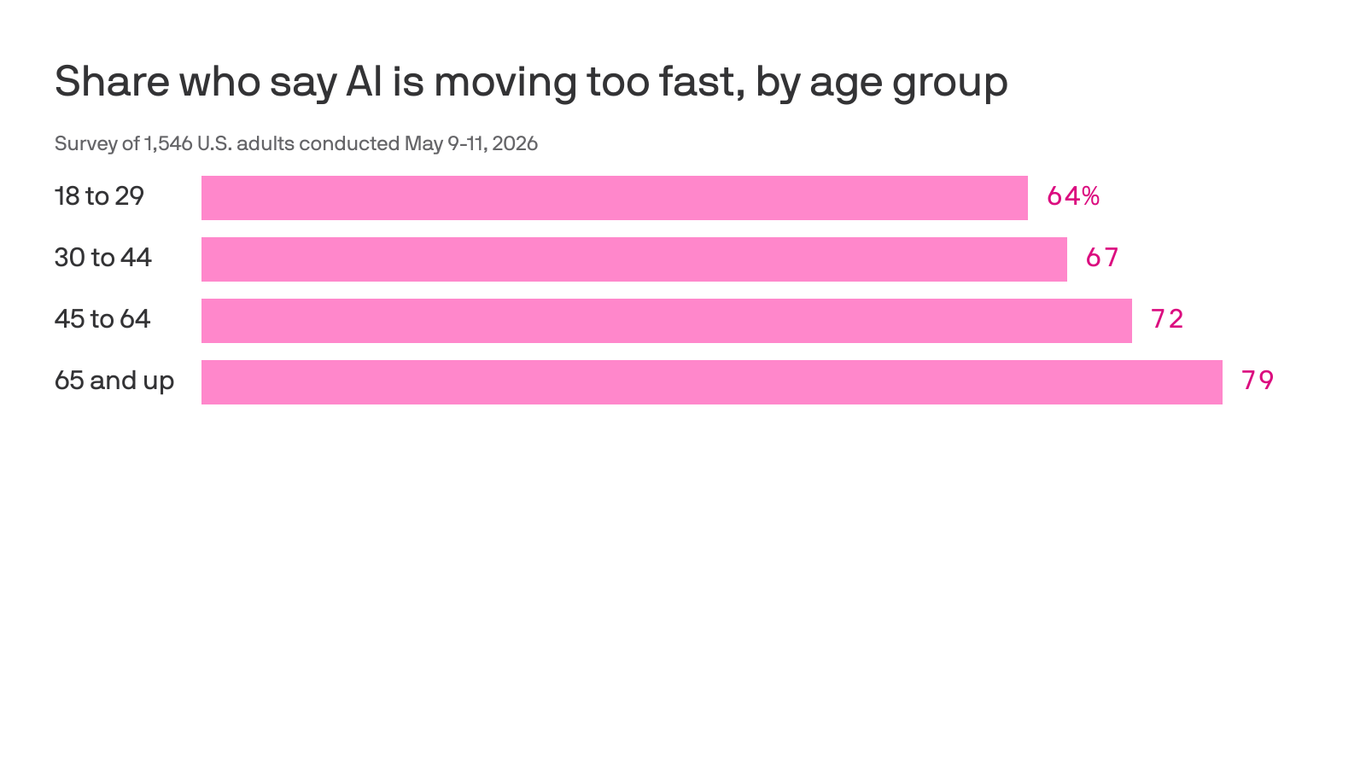
AI Public Sentiment — 70% of Americans say AI moving too fast; negative views jumped to 50%.
-
Kin Health — Raised $9M for patient-controlled AI notetaker that doctors cannot access.
Good morning, AI Knowledge Worker. SpaceX targets June 12 for a $1.75 trillion IPO. It’s history’s largest public offering. Investors get rockets plus Grok AI and X platform.
The 100x price-to-sales ratio dwarfs typical tech valuations. Is Musk’s space-AI-social convergence worth the premium? This IPO will reset AI startup valuation expectations.
In this issue:
-
SpaceX’s $1.75T IPO merges rockets with AI
-
First AI-discovered zero-day exploited in wild
-
70% of Americans say AI moving too fast
-
Kin Health’s $9M patient-controlled AI notetaker
SpaceX Eyes Historic $1.75T IPO as Musk Merges Rockets, AI, and Social Media
The Scoop: SpaceX targets June 12 for history’s largest IPO at $1.75 trillion. Investors aren’t buying rockets alone—they’re getting Starlink, Grok AI, and X platform.
The Technical Details:
-
The offering aims to raise $75 billion with formal announcement expected June 4.
-
February’s $1.25T all-stock xAI merger bundled Grok chatbot and X into SpaceX.
-
Starlink generated $11.4B revenue in 2025 with 63% operating margins across 10M subscribers.
-
Total group revenue of $16B implies 100x price-to-sales ratio, far above typical tech valuations.
-
Scottish Mortgage valued SpaceX at $1.25T in March, a 40% discount to IPO target.
Why It Matters for You: The valuation raises serious sustainability questions for decision makers evaluating AI investments. A 100x price-to-sales multiple dwarfs even premium SaaS companies trading at 10-15x revenue. Starlink’s 63% margins carry the entire conglomerate, creating concentration risk for investors. The xAI integration positions SpaceX against OpenAI and Anthropic in AI infrastructure competition. This IPO will likely reset expectations for AI startup valuations across the market.
The Bigger Picture: Musk is betting investors will pay conglomerate premiums for space-AI-social convergence. The timing alongside his OpenAI lawsuit suggests he’s building an alternative AI empire.
First Confirmed AI-Discovered Zero-Day Wasn’t From OpenAI or Anthropic
The Scoop: Google’s threat team caught attackers weaponizing a real zero-day discovered by AI. The model wasn’t ChatGPT, Claude, or any major frontier AI.
The Technical Details:
-
The exploit was a 2FA authentication bypass in an open-source web admin tool.
-
Attackers wrote a Python script to exploit the vulnerability at scale.
-
Google detected the attack before mass exploitation campaign launched in May 2026.
-
The AI model used remains unnamed by Google’s disclosure report.
-
This marks the first documented case of AI-assisted zero-day discovery in wild attacks.
Why It Matters for You: Safety restrictions at major AI labs don’t prevent weaponization. Smaller models without guardrails already find vulnerabilities attackers can exploit. Security teams can’t rely on frontier lab safety measures alone. Defensive strategies must assume AI-assisted exploit discovery is now operational reality. The unnamed model detail matters more than the specific exploit.
The Bigger Picture: Attackers optimized for the path of least resistance. Frontier models built safety moats while smaller tools opened side doors. This mirrors how encryption bans fail when unrestricted alternatives exist globally.
AI Backlash Hits Critical Mass: 70% Say Technology Moving Too Fast
The Scoop: Public sentiment toward AI collapsed across all demographics. Enterprise adoption now faces serious headwinds.
The Technical Details:
-
70%+ of Americans say AI advances too quickly per Economist/YouGov polling.
-
Negative AI views rose from 34% to 50% over three years.
-
Only 18% of young people (ages 14-29) feel hopeful about AI technology.
-
Backlash spans parties: 68% Republicans and 77% Democrats say pace too fast.
-
Record data center cancellations in Q1 2026 due to community resistance.
Why It Matters for You: Sales cycles will lengthen as customers demand stronger justification for AI investments. Data center constraints directly limit compute access for training and inference workloads. Morgan Stanley flags public pushback as a binding constraint on AI infrastructure growth. Companies deploying AI must now address trust and transparency in customer conversations. The gap between executive optimism and public sentiment creates strategic blind spots.
The Bigger Picture: This mirrors historical tech backlash patterns like early internet privacy concerns. The industry faces a trust deficit similar to social media’s reckoning.
Kin Health Raises $9M for Patient-Side AI Notetaker That Doctors Can’t Access
The Scoop: Kin Health built an AI notetaker FOR patients to record doctor visits. Doctors can’t access it—only patients control the data.
The Technical Details:
-
Three-stage processing pipeline: transcription → clinical narrative → patient-facing summary with action items
-
Uses specialized medical models for transcription, currently training on regional accents and mask speech
-
HIPAA-compliant privacy standards but not HIPAA-certified since it’s patient-facing, not provider-facing
-
EHR integration planned for 2026 to pull physician notes into patient’s unified health graph
-
All data encrypted by default with summaries kept private unless patient chooses to share
Why It Matters for You: This addresses a massive gap in healthcare AI tooling. Provider-side notetakers like Heidi Health generate $600M annually but leave patients out. Kin’s freemium model with referral monetization mirrors GoodRx’s playbook. The founding team already built and sold HeyDoctor to GoodRx. Patient-controlled data creates distribution advantage—Kin travels between specialists and health systems. Different regulatory path means faster deployment than HIPAA-certified provider tools.
The Bigger Picture: Healthcare AI is shifting from institution-controlled to patient-controlled data infrastructure. GoodRx proved consumers will adopt free health tools funded by referrals.
📡 AI Discoveries
1. Mira Murati’s Thinking Machines Debuts ‘Interaction Models’ AI Approach
Former OpenAI CTO Mira Murati’s new company introduces a novel AI paradigm called ‘interaction models’ designed to keep humans as the ‘main characters’ in AI-driven environments, representing a significant philosophical shift in AI development. — Monique Malcolm Hay Newsletter, 2026-05-17
2. First Major AI Company IPO Launches as Google Prepares Big AI Updates
The AI industry sees its first significant IPO, marking a maturation milestone for the sector, while Google prepares major AI product announcements that could reshape the competitive landscape. — Everyday AI, 2026-05-18
3. AI in Drug Discovery Market to Reach $6.89 Billion by 2029
The AI-powered drug discovery market is projected to grow at 29.9% CAGR, driven by widespread adoption of machine learning and deep learning platforms in pharmaceutical development, demonstrating AI’s transformative impact on healthcare innovation. — BioSpace, 2026-05-17
🌍 AI for Good
1. AI-Generated Images Offer Ethical Alternative for Nonprofit Communications
Nonprofits are exploring AI-generated imagery as a way to tell compelling stories without exploiting vulnerable populations, addressing longstanding ethical concerns about dignity and consent in humanitarian photography. — AI4NGO, 2026-05-15
2. Ford Foundation and Humanity AI Award $18M to Frontline Voices Shaping Equitable Tech
This collaborative philanthropic initiative addresses equity in AI development by funding organizations working on labor rights, democratic values, and cultural representation in the next era of technological innovation. — Ford Foundation, 2026-05-18
3. Global Accessibility Awareness Day Marks 15 Years as AI Redefines Digital Inclusion
As GAAD celebrates its 15th anniversary, co-founder Joe Devon highlights AI’s dual role as both challenge and solution for digital accessibility, emphasizing the ongoing need for inclusive design in AI development. — Double Tap, 2026-05-19
Partner Spotlight
Support BrainScriblr while discovering powerful AI tools (affiliate links):
-
n8n — No-code automation platform for AI workflows
-
Hume AI — Emotional intelligence API for human-centered AI
-
Railway — Cloud platform for deploying AI applications
-
Cudo Compute — Distributed cloud computing for AI workloads
Worth Your Inbox
Discover more quality AI and tech content:
-
SemiVision — Semiconductor industry insights and AI chip developments
-
Turing Post — Deep technical analysis of AI research and breakthroughs
-
FinOps Weekly — Cloud cost optimization and financial operations
-
CoreUpdates — Essential tech updates and startup intelligence
-
The Multiverse School — Learning and development in the AI era
-
Simple AWS — Practical AWS tutorials and cloud architecture
-
EarthConscious — Sustainable living and environmental consciousness
Subscribe to Brainscriblr
Broader AI commentary. Subscribers get new posts by email a day before they go live on the site.
Email signup is coming soon — in the meantime, follow the Brainscriblr RSS feed.